Thrifting for Beginners: A Complete Guide to Thrift Flipping (2026)
New to thrifting? Learn where to go, what to look for, how to spot items worth real money, and how to turn thrift finds into resale profit — a complete beginner's guide.

Thrifting is having a moment — it's cheaper, more sustainable, and more fun than retail, and for a growing number of people it's a genuine income stream. But a thrift store can be overwhelming: hundreds of racks, no organization, and most of it not worth your money. This beginner's guide covers where to go, how to hunt efficiently, and how to tell the $4 throwaway from the $80 flip.
Where to thrift (and when to go)
Start with the big chains (Goodwill, Savers, Salvation Army) for volume, then explore church and charity shops, estate sales, garage sales, and flea markets for the underpriced gems. The most important habit is frequency: stock turns over constantly, so short, regular trips beat occasional marathons. Go early in the week or right after restocks when the racks are full.
Hunt with a plan, not just vibes
Experienced thrifters don't wander — they sweep efficiently and develop an eye for one or two categories. As one r/reselling regular advised beginners: "start with something you have some knowledge of or are already interested in (t-shirts, jewelry, cds/vinyl, hats)." Niche knowledge is your edge; you'll spot a grail on a packed rack in a second while everyone else walks past it.
What to look for (and what to skip)
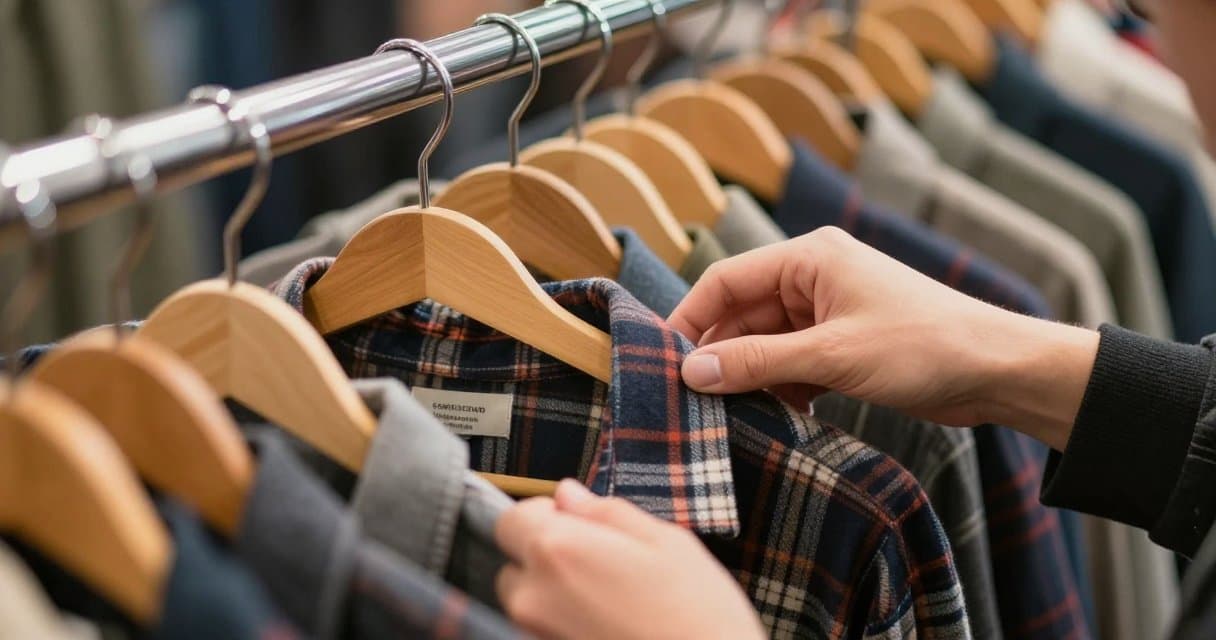
Whether you're thrifting for your own closet or to resell, value lives on the tag. Check the brand, the country of manufacture, and the material first. Our full breakdown — how to tell if thrift clothes are worth money — covers the exact 30-second checks. The short version:
- Grab: searchable brands (Carhartt, Patagonia, vintage Nike, Levi's), natural fibers (wool, leather, silk, heavy cotton), and anything made in USA/Japan/Italy.
- Inspect: high-wear zones — underarms, collars, cuffs, hems — and wool for moth holes.
- Skip: fast-fashion polyester, heavy stains, dry rot, and broken zippers on low-value pieces.
From thrift find to resale profit
If you're flipping, the rule is simple: never pay based on hope. Check what the item has actually sold for before you buy. Learn the manual method in how to check eBay sold listings, or scan the piece in Cluzy to see real sold comps across eBay, Poshmark, Depop, and Mercari — plus your profit after fees — in about two seconds. When it's a buy, list it well: great photos, measurements, and an honest condition note. (See reselling for beginners for the full flow.)
Focus on taking excellent pictures, writing simple but thoughtful descriptions, and pricing well — check comps of items SOLD, not the asking price.
Flip thrift finds faster
Scan thrift finds at the rack. List it to eBay before you leave.
Cluzy identifies thrift finds, pulls real sold prices on eBay, Poshmark, and Depop, and posts an optimized eBay listing in one tap. No app-switching.

 Free to download · iOS & Android
People also ask
Frequently asked questions
- How do I start thrifting for beginners?
- Go often to a mix of chain thrift stores and charity shops, focus on one or two categories you know, and check the tag (brand, country of manufacture, material) before buying. If you're reselling, verify real sold comps before you buy so you only spend on items that move.
- What should I look for when thrifting to resell?
- Searchable brands in natural materials, made-in-USA/Japan/Italy production, vintage tells (single-stitch hems, union tags, old logos), and sealed new-old-stock items. Inspect high-wear areas and skip fast-fashion polyester and damaged low-value pieces.
- How often should I go thrifting?
- As often as you reasonably can — thrift inventory turns over constantly, so frequent short trips beat occasional long ones. Going right after restocks or early in the week gives you the fullest racks.
- How do I know if a thrift item is worth money?
- Read the tag first, then confirm with real sold comps. Scanning the item in Cluzy identifies it and shows what it's actually sold for across eBay, Poshmark, Depop, and Mercari, plus your profit after fees — so you know before you buy.
Sources

Written by
The Cluzy Team
Reselling editors
The Cluzy team researches real sold-comp data across eBay, Poshmark, Depop, and Mercari and tests every tactic against actual flips before publishing. We cover sourcing, authentication, pricing, and listing strategy for thrift resellers — the same expertise built into the Cluzy app.
Keep reading
Thrift Sourcing
How to Tell if Thrift Store Clothes Are Worth Money (2026 Reseller's Guide)
A reseller's field guide to spotting valuable clothing at the thrift store — the tags, materials, and brands that resell, and the 30-second checks that separate a $4 buy from a $200 flip.
Thrift Sourcing
Estate Sale Flipping: How to Find Items Worth Money in 2026
A reseller's guide to estate sales: how to find them, what categories are actually worth money, how to check resale value on the spot, and how to negotiate the best price.
Reselling Guides
AI Scan Apps for Thrifting: How to Price Resale Items in Seconds (2026)
How an AI scan actually prices a thrift find, the difference between apps that guess and apps that pull real sold data, and what to look for in a thrift scanner app in 2026.
Flip thrift finds faster
Scan thrift finds at the rack. List it to eBay before you leave.
Cluzy identifies thrift finds, pulls real sold prices on eBay, Poshmark, and Depop, and posts an optimized eBay listing in one tap. No app-switching.
Free to download · iOS & Android